In millions of twelvemonth ’ fourth dimension , a new supercontinent will form when all of our existing continents meet . This , according to a raw study , will have a serial publication of catastrophic impingement that will make Earth inhospitable to land - establish mammal and will likely lead to a mass extinguishing .
No more mammals?
Greenhouse flatulence emissions get by human natural process are push our clime to extreme that have not been have in millions of yr . This is already have a devastating impact on ecosystem across the world , but despite this , it is still not clear whether such drastic changes will ever make a tipping dot where mammals can no longer survive .
According tosomeresearch , current warming trends will raise global temperature to such an extent that some areas of the populace , such as region of Africa , Australia , Europe , and South Asia will eventually become inhospitable to mammal life . However , even with the combustion of all available fossil fuels in the distant future , most of the world ’s airfoil will still be suited for some mammals to hold up on .
outdoors of the clime crisis , there is also theinevitablepoint where the Earth will leave behind the Sun ’s habitable zona , which will ultimately demolish all life on the planet as it experiences a runaway greenhouse effect .
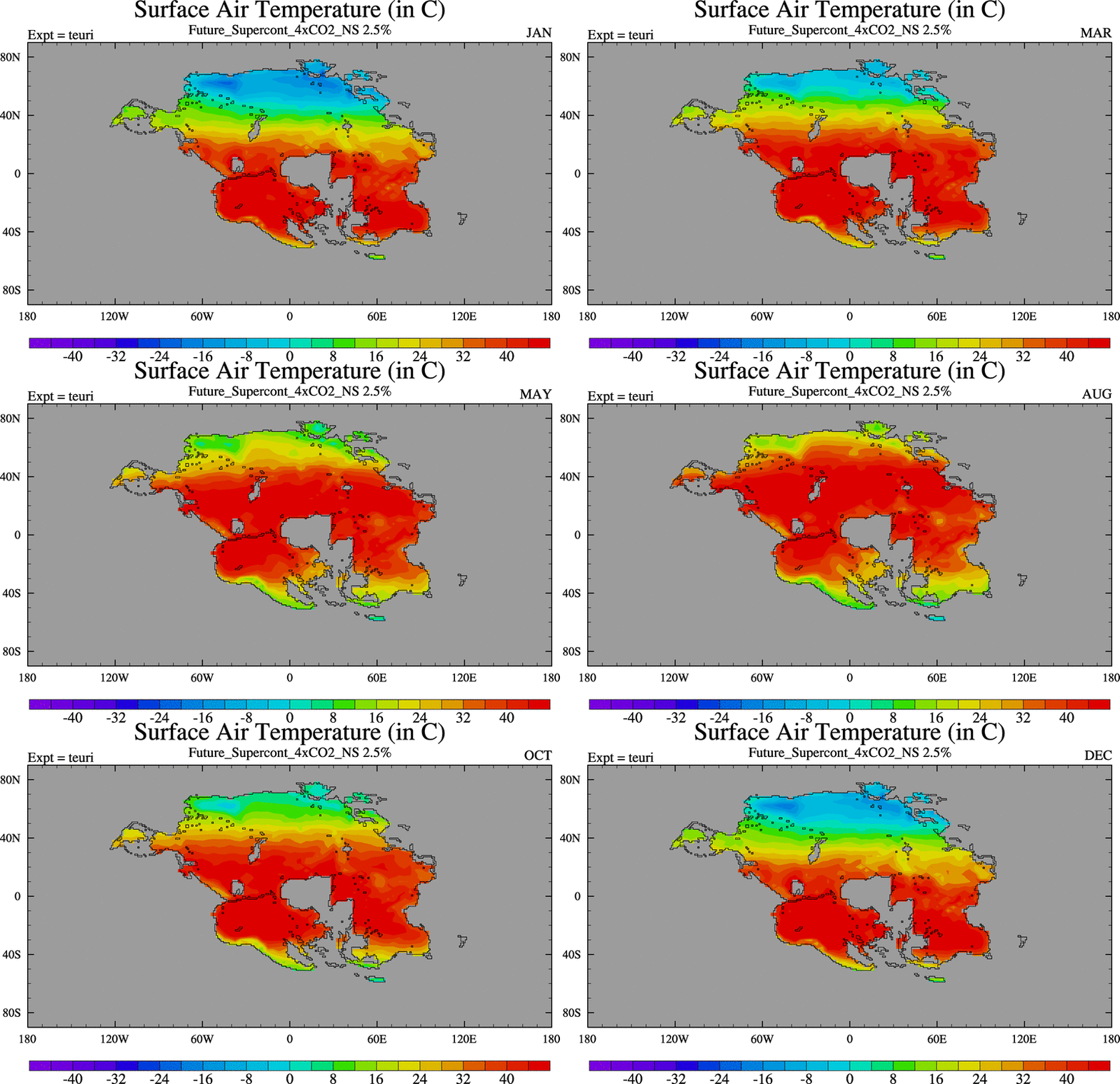
The average monthly surface air temperature for Earth is 250 million years in the future if the continents collide to form Pangea Ultima.Image Credit: Alex Farnsworth
Alas , this is not a cheery topic to be sure , but while this latter situation will not occur for one thousand million of years , novel research conducted by an external squad of scientists has even bad newsworthiness – mammalian life could be destroyed far sooner than this because of long - terminus processes linked to architectonic plate .
The supercontinent that will end it all
As we know , the Earth ’s surface is not static . Although it changes at the same rate that human fingernails grow , the Continent are shifting all the time . It is estimated that in about 250 million year , most of the existing continents will clash to mold a supercontinent called “ Pangea Ultima ” . unluckily , the organization of this Modern supercontinent will probably usher in significant global modification that will make the planet inhospitable to mammalian .
The geologic record shows that , over the last 3.5 billion years , there were significant swings in atmospherical PCO2,partial insistence of carbon dioxide , throughout the stage of continental fabrication , tenure , and break - up . PCO2is usually used to measure CO2within profligate , but it is also used in meteorology and climate science to identify the fractional pressure of the gasolene as a function of its concentration in the standard pressure .
Essentially , whenever supercontinents take shape and finally break up , they cause natural cycle of heating and cooling that change the amount of PCO2inthe atmosphere . However , the formation of Pangea Ultima will likely concur with increased solar natural process from the Sun . This will see it give out around 2.5 percent more zip compare to today , which , coupled with the continent ’s tectonic activity , specially through volcanic emanation , will lead to an increase in atmospheric PCO2 .
“ The formation and decomposition of [ this supercontinent ] will throttle and , given a much greater source - to - sink proportion of pCO2 , ultimately cease tellurian mammalian habitability on Earth by outgo their warm thermal allowance , gazillion of years earlier than antecedently hypothesize ” , the researchers explain in their written report .
Inevitably , they exact , the changes in both plate tectonics and the increased solar energy will produce feedback in the climate that will raise the global mean annual temperature ( GMAT ) . The impact of this combination will likely lead to monumental hyperthermal events cognate to thePermian – Triassic event , the large and most grievous known quenching event the Earth has ever experience .
“ Today , vital estrus focus measure are rarely exceed on land and , if so , only for unforesightful time plate ( hours or day ) . If only the geography was to switch , critical heat focus is not surmount but does drive the climate towards critical threshold ” , the author tot up .
“ combine with a succeeding increment in [ solar muscularity ] , large region of the supercontinent infract these critical doorway for periods of [ 30 days or more ] . ”
According to their theoretical account , the temperature change in many regions will mean that only extremely specialized migratory mammals would be able to compete in such environments . But even for these rarefied few , the continental conditions – such as all-encompassing comeupance – may make such migratory strategies ineffective .
Even burrowing species that can avoid surface heat above ground only show a small increase in survivability .
The resolution from these models are pretty damning and understandably heavy to translate . It is worth remember that we can still take natural action to bound the impacts of human - led climate change for contemporaries of the near future . Still , if you ’re in need of a quick palate cleaner , have a aspect at thisadorablediscovery that will cheer anyone up .
The study is published inNature Geoscience .
