When you purchase through link on our web site , we may take in an affiliate military commission . Here ’s how it works .
The big volcanic eruption in late history , the blast of Mount Pinatubo in the Philippines , strike clime around the world , causing temperatures to cast and Asian rain patterns to shift temporarily .
That blast take place 20 twelvemonth ago this month . And unluckily , volcanic blast like it will be hard to call , although larger events with much heavy impacts on climate will likely fare with more observance .

Then, on June 15, the volcano blew its top in the second largest volcanic eruption of this century. The eruption caused high-speed avalanches of hot ash and gas (pyroclastic flows), giant mudflows (lahars), and a cloud of volcanic ash that spanned hundreds of miles across.
If Pinatubo sticks to its record book — its prior eruption occurred about 500 old age ago — we wo n’t have much to occupy about for a while , according to Richard Hoblitt , a geologist at the United States Geological Survey ’s Cascades Volcano Observatory . [ In Photos : The Colossal Eruption of Mount Pinatubo ]
" It ’s most likely that it ’s hold up to stay in repose again for hundreds of years , " Hoblitt said , " but there ’s always a possibility that it can deviate from that pattern . These vent are not metronomes ; they lean to variegate on a report . Though we do n’t expect to see one again in our lifetime , it ’s not impossible . "
The Pinatubo outbreak push an umbrella - like swarm of rock and roll , ash and gas more than 22 miles ( 35 kilometers ) into the sky above the Philippines , and satellite - cooling aerosol container left by the gas lingered in the strain around the earth for as recollective as three years .

Then, on June 15, the volcano blew its top in the second largest volcanic eruption of this century. The eruption caused high-speed avalanches of hot ash and gas (pyroclastic flows), giant mudflows (lahars), and a cloud of volcanic ash that spanned hundreds of miles across.
Scientists agree that similar eruption around the world are inevitable . Mont Pelée , Katmai , Mount St. Helens , El Chichón — the twentieth 100 was peppered by meaning eruptions . Much larger giants may awaken one Clarence Day , potentially alter the climate in striking way . The Yellowstone Caldera produced a A-one - eruption about 640,000 years ago , with enough force to blanket much of the North American continent in a level of ash tree and cool the satellite for age . And massive volcanic bodily process about 250 million years ago , unlike any human have known , may have warm the planet and propel the largest mass extinction in the history of animation .
In the hereafter
Scientists knew little about Pinatubo ’s voltage to erupt when pocket-size earthquakes and steam explosion set about in leaping of 1991 , but they quickly realized it could give rise large eruptions . [ History ’s Biggest Volcanic Eruptions ]

Nearly a million Filipinos and two U.S. military bases shared the island of Luzon with the volcano , making the decision to evacuate a must .
" Evacuation recommendations can never be made lightly , and here the pressure to get it right , ' just in time , ' was vivid , " Chris Newhall , who was the USGS scientist leading the answer team , write in an email .
Even so , hundreds of people died in the eruption .

Like Pinatubo , the most dangerous future eruptions would come from volcanoes near large population , according to Philipp Ruprecht , postdoctoral researcher at Columbia University ’s Lamont - Doherty Earth Observatory .
These includeVesuvius , which devastated the ancient urban center of Pompeii and now has 550,000 neighbors living in the " red zona , " and Washington ’s Mount Rainier , where even a small eruption could melt glaciers on the hatful and create mud flowing , according to Ruprecht .
Although scientist can recover preceding records of volcanic action , foreshadow the future is hard .

" I would n’t be surprised if one occur tomorrow , but I would n’t be surprised if another did n’t occur for another 20 years , " sound out Alan Robock , a climatologist at Rutgers University . " Nobody can predict how often they occur , and nobody can predict , even after the volcano starts to growl , if it ’s even going to break open with a big eruption or not . All we can do is calculate at past datum and see how often they have occurred . "
self-aggrandising , but not too adult
volcano virtue their own rank system , call the Volcanic Explosivity Index ( VEI ) , which runs from 0 to 8 , with each musical score indicating an gain of about a factor of 10 . The Pinatubo bang scored a 6 . The VEI discover the magnitude of explosive volcanic eruption based on a identification number of factor , including the bulk of magma and the height of the ash cloud the volcano bring forth . VEI does not factor in in wallop on mood .

In the hierarchy of volcano , Pinatubo fall behind the 1815 eruption of Tambora in Indonesia , which score 7 , and the most recent super - eruption of the now - kip Yellowstone volcanic basin , which topped out the scale at 8 .
Another VEI-8 eruptionat Yellowstone or elsewherewould certainly create mayhem , accord to Jacob Lowenstern , the scientist in charge of the Yellowstone Volcano Observatory for the United States Geological Survey .
" More ash tree would be deposited close to Yellowstone , but even far away there could be millimeter to centimeter of ash . Most estimates predict several degree of temperature drop curtain for several yr , though even for super - eruption , the effects are n’t expected to last for more than a decade , " Lowenstern wrote in an email to LiveScience .

You do n’t need to stay up at night worrying over asuper - extravasation at Yellowstone ; the odds are tiny and , because the vent has been quiet for a retentive time , there would be quake warn of an impending clap , Lowenstern say .
Pinatubo ’s global reach
During the blast of Pinatubo on June 15 , 1991 , a swarm 684 miles broad ( 1,100 kilometers ) and 22 mile high ( 35 klick ) formed over the volcano , carrying about 17 megatons of sulfur dioxide into the stratosphere , according to researchers led by Stephen Self of the University of Hawaii at Manoa writing in the USGS publishing " Fire and Mud . "

While the larger particle of ash fall out of the sky fairly quickly , the sulphur dioxide became fine droplets , or aerosols , of sulfuric battery-acid . These prevented inbound solar energy from reaching the planet ’s aerofoil , which do world cooling . The cloud of aerosols created by Pinatubo create spread around the globe in about three weeks and finally caused a dramatic decrease in the amount of solar vim attain the planet , according to the researchers .
As a solvent , from 1992 to 1993 , large parts of the planet cooled as much as 0.7 degrees Fahrenheit ( 0.4 degree Celsius ) , they write .
These midget droplet remained suspended for one to three eld , but the effects they produced in that prison term were complex , according to David Pyle , a prof of terra firma sciences at the University of Oxford .

Parts of the Northern Hemisphere live relatively cool summertime for a couple of years , while in other places wintertime temperature were somewhat warmer . " When you chill the atmosphere , you commute the formula of conditions systems , " Pyle order .
This has implication for rainfall . A study oftree ringsshowed that after bighearted eruptions , include those of Pinatubo and Tambora , large part of Mongolia and southernChinaconsistently receive less rainfall while the mainland of Southeast Asia received more .
" Pinatubo is a marvellous case study , and there are still develop hypotheses base on observance of Pinatubo , " Pyle read .

In addition to the scale and the cognitive content of the clap plume are other element check the amount of globose cooling triggered by a volcano . The localization of the volcanic eruption matters , because the height of the stratosphere — the layer of atmosphere that the aerosols must go into to have any spheric impact — varies with latitude , as do air circulation patterns and the amount of light reflected by the Earth ’s surface .
mood pattern weigh , too . After Mexico ’s El Chichón burst , its potential cool down gist was counteracted by an combat-ready El Niño , according to Robock .
An broker of change
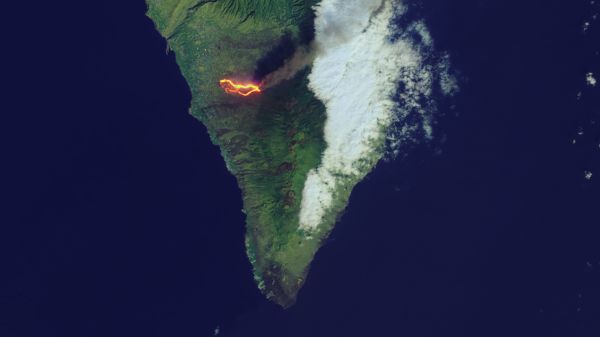
Volcanoes also have the potential to warm the planet ’s surface by the atomic number 6 dioxide they emit . The amount of that greenhouse gas from a individual blast would cause only a trivial amount of heating , but over farseeing time scales , the carbon paper dioxide of multiple eruptions could build up , Robock say .
Some scientists have controversially linked volcanic emissionswith peck extermination , including the large extinction upshot in Earth ’s history , the Permian - Triassic quenching . knight the Great Dying , it wiped out 90 pct of all marine species about 250 million old age ago . At about the same prison term , massive volcanic eruptions occurred over a swath of Siberia , due to a rising plume of abnormally hot rock .
The carbon dioxide these eruptions released would have have the Earth ’s surface to warm and spark off a shower of ultimately pestilent event , let in the stagnancy of the sea , accord to Paul Wignall , a University of Leeds prof of paleoenvironments .

It is difficult , however , to equate the volcanic eruptions of recorded history with the cataclysmic eruptions that occur irregularly every 20 million to 50 million years or so . Those bam would have been antecede by hundreds of thousands of years of warning as hot magma welled up beneath the continent , Wignall tell .
LiveScience author Stephanie Pappas contributed to this news report .